Today
Fit the mission
inside the rocket.
Rocket-defined architecture- Constrained by fairing volume
- Dependent on complex deployment
- Fixed after launch
The rocket defines the size and architecture of the mission.

Reversible structural joints for space
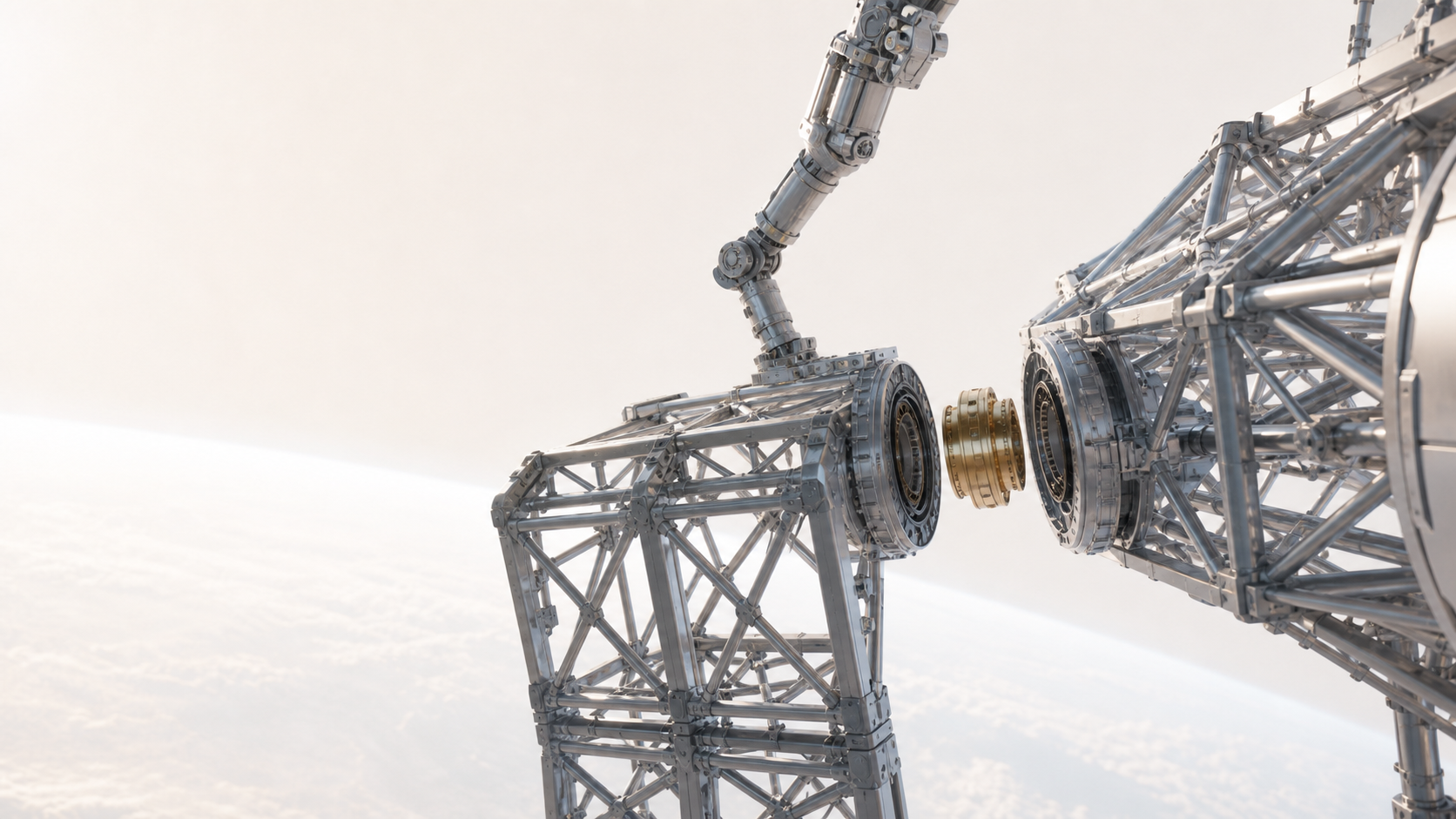
Space Glue is developing reversible structural joints that enable robots to connect, release, repair and expand large orbital and lunar structures after launch.
Bond→Debond→Rebond
NASA-originated material technology·U.S. Space Force-backed system development
A structural interface designed to behave rigidly during operation, then reopen when the mission changes.
The structural constraint
Every spacecraft must fit inside a launch fairing and survive deployment. Future infrastructure will instead be launched as modules, assembled at mission scale, and changed as mission requirements evolve.
The launch vehicle currently defines the maximum packaged system. In-space assembly separates launch dimensions from final architecture.
Today
The rocket defines the size and architecture of the mission.
The future
The mission defines the architecture, not the rocket.
The unanswered question
Modular infrastructure depends on a structural connection that can support assembly, operation, and future change.
A new structural layer
Space Glue enables robots to create rigid structural connections, then intentionally reopen them for repair, expansion or mission reconfiguration.
Package standardized components for launch.
Move and align modules after launch.
Create a rigid, load-bearing structural connection.
A structural interface designed to remain rigid in operation and reopen through controlled activation.
Repair, expand, upgrade or repurpose the architecture.
Assemble once. Reconfigure when the mission changes.
Technology platform
Space Glue provides the reversible structural bond. Orbix is designed to align, activate, control and verify the connection. Together, they enable space structures to be assembled, released, repaired, expanded and reconfigured after launch.
The high-performance material layer that creates the rigid structural bond.
The engineered hardware and control architecture designed to align, activate, release and verify the joint.
Space Glue + Orbix
Space Glue creates the bond. Orbix controls the connection. Together, they make reconfigurable infrastructure possible.
Connection lifecycle
One structural interface, designed to connect, release and return to service in a new configuration.
Orbix aligns and activates the interface. Space Glue forms the load-bearing bond.
Orbix applies controlled activation to release the selected Space Glue interface.
Orbix realigns the interface. Space Glue creates the next structural connection.
Space Glue Systems turns a structural joint into an interface for long-lived, evolving infrastructure.
Applications
Antennas, trusses, reflectors, and precision apertures
Stations, laboratories, and modular platforms
Solar, thermal, communications, and compute infrastructure
Surface structures and robotic construction
Technology heritage
Next defining step
Demonstrate the complete Space Glue + Orbix structural joining system in orbit.The technology has progressed through material development, environmental testing, robotic joining and government-funded system maturation. The next objective is an integrated orbital bond–debond–rebond demonstration.Bond / debond cycles
Measured at the 51st cycle
Technology heritage
System development
Foundational reversible structural bonding technology and enabling chemistry.
FoundationMechanical cycling, thermal performance and relevant environmental evidence.
ValidationReversible material technology incorporated into robotic assembly and joint concepts.
IntegrationJoint geometry, controlled activation, robotic operations and large-structure application development.
System maturationOrbix interface + activation layerValidate robotic alignment, structural bonding, controlled release and rebonding through one complete in-orbit operating cycle.
Space Glue creates the bond.Orbix controls the connection.Together, they form the complete system.
Prove the complete bond–debond–rebond cycle in space and create the flight heritage required for customer adoption.
Program references indicate technology heritage and development activity and do not imply commercial endorsement or partnership.
The next milestone
We are preparing to demonstrate Space Glue and Orbix through a complete bond, debond and rebond operating cycle in space.
We are seeking mission hosts, aerospace integrators, strategic investors, government programs and development partners to help complete the next step.
Mission hosts · Integration partners · Strategic investors · Government programs
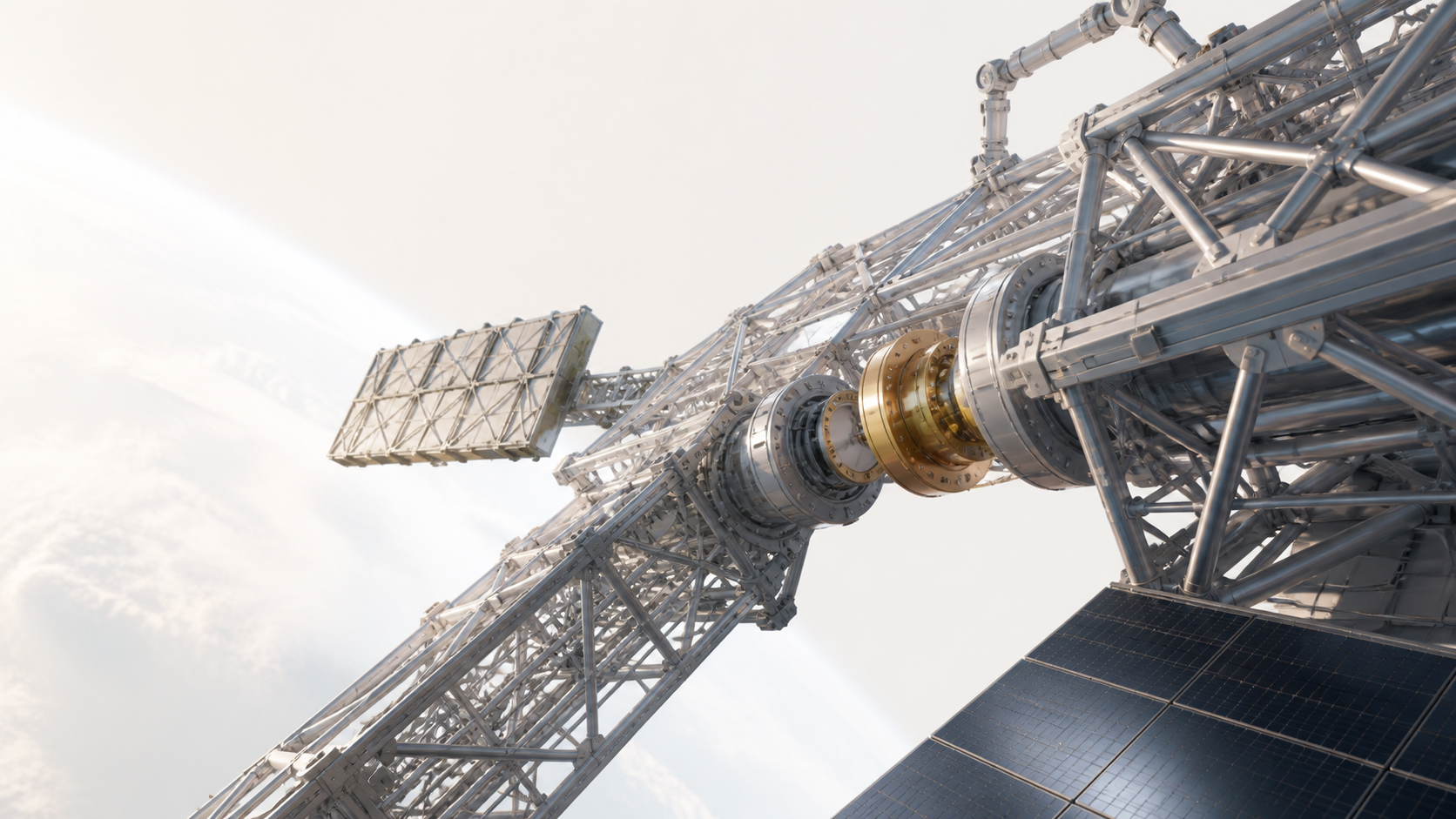
Space Glue creates the bond.Orbix controls the connection.The next step is proving the complete system in orbit.
Long-term vision
Help us create the flight heritage required for qualification, customer adoption and the next generation of reconfigurable space infrastructure.